Skip to content

Ad formats explained

Ad formats define how advertisements are presented across digital environments, shaping how users see, interact with, and respond to promotional messages. This guide outlines the main types used in digital advertising and explains how different formats align with campaign objectives and performance considerations.

Feb 12, 2026
Illustration for the article “Ad formats explained”

What is an ad format?

An ad format is the structure and presentation style of an advertisement across digital channels. It defines how the ad appears to users — whether as a banner, video, search result, or interactive element — and shapes how audiences engage with it.

Components of a digital ad

Most digital ad formats consist of a standardized set of technical components:

  • The creative, which serves as the visual or auditory centerpiece (e.g., an image, MP4 file, or HTML5 animation)
  • The copy, which includes the headline and body text designed to provide context and persuasion
  • The call to action (CTA), which is the functional element — usually a button — that prompts a specific user response
  • The destination URL, which is the landing page or app environment where the user is directed after interacting with the ad

Together, these components should meet ad format requirements to ensure proper display, functionality, and user experience across all devices and platforms.

Components of a digital ad: creative, copy, call to action, and destination URL

Ad types and ad formats: what is the difference

The terms “ad types” and “ad formats” are often used interchangeably, however, they represent different levels of campaign classification. An ad type refers to the broad category or channel of advertising defined by its environment and delivery method, such as search, display, or native. In contrast, an ad format is the specific technical configuration and visual layout within that type. In short, the “type” is the environment where you meet your audience, while the “format” is the specific creative tool you use to deliver your message.

Types of ad formats

Most ad formats are divided into specific types based on their placement, delivery method, and the nature of user interaction. Below are the primary categories used in digital marketing and format examples within each.

Display ads

Display ads are visual advertisements placed on third-party websites, apps, or social media. They typically appear in designated ad spaces and are designed to capture attention while users consume other content. A few examples of ad formats of this type include:

  • Banner ads
  • Leaderboard ads
  • Sidebar ads
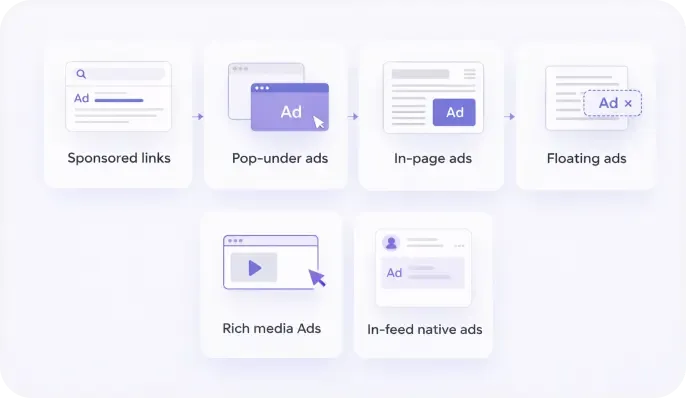
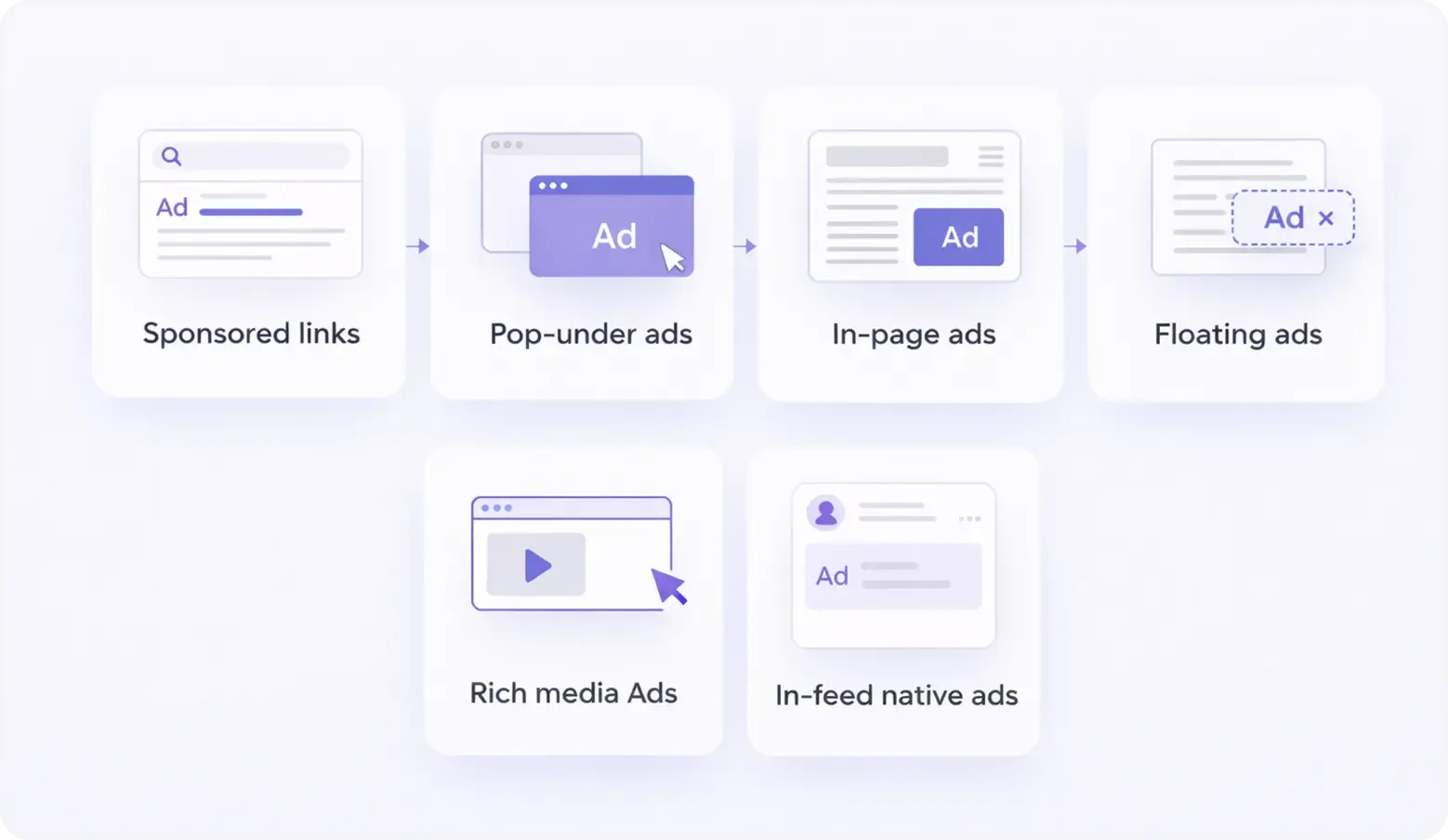
  • Rich media ads

Native ads

These ads are designed to match the look, feel, and function of the platform they appear on. They integrate into editorial feeds or content streams and are labeled as sponsored. Among such ad formats are:

  • Sponsored links
  • Pop-under ads
  • In-feed sponsored posts

Video ads

Video ads use motion and audio to deliver marketing messages. They can appear before, during, or after video content or as standalone placements within digital environments. Common examples of video ads are:

  • Pre-roll and mid-roll ads
  • Out-stream video ads
  • Rewarded video ads

Audio ads

Audio ads are delivered through music streaming services, podcasts, or digital radio platforms. They reach users during listening sessions, often when no visual screen is actively engaged. Examples of such ads include:

  • In-stream audio ads
  • Podcast host-read ads
  • Programmatic audio spots

Social media ads

These are paid placements distributed on social platforms like Meta, LinkedIn, or TikTok. Such ads are typically embedded into user feeds, stories, or short-form content streams. Examples of formats within this type include:

  • Feed ads
  • Story ads
  • Carousel ads

Search ads

These ads appear on search engine results pages (SERPs). They are triggered by specific keywords and are usually text-based, though visual extensions may also be included. Some examples of search ads are:

  • Text ads
  • Dynamic search ads
  • Shopping or product listing ads

Incentivized ads

These ads offer users a reward in exchange for engaging with the advertisement. They are commonly used in mobile apps and gaming environments. Key examples of formats within this category include:

  • Offer-based ad walls
  • Bonus content unlock ads
  • Rewarded surveys

Understanding the different ad format types helps marketers grasp the unique features of each format, guiding more informed campaign planning.

Matching ad formats to campaign objectives

To ensure campaign efficiency, it is essential to match ad formats with defined marketing objectives. The following table maps specific campaign goals to the digital formats best equipped to deliver those results.

Campaign objectiveDescriptionBest-suited formats
Brand awarenessIncrease visibility and recognition of a brand or productBanner, leaderboard, in-page, pop-under, video, floating, or rich media ads
Audience engagementEncourage users to interact with content or spend more time with the brandRich media, in-feed native, carousel, interactive, or video ads
Lead generation / conversionsDrive specific user actions such as sign-ups, purchases, or inquiriesSponsored links, text search, product listing, or rewarded ads
Content promotionAmplify articles, videos, or social posts to reach a wider audienceIn-feed native ads, sponsored posts, recommended content widgets, video ads
Event or product launchesHighlight new products, services, or events for immediate attentionVideo (pre-roll, mid-roll), floating, interstitial, or rich media ads
Direct response / clicksDrive immediate clicks to websites, landing pages, or offersSponsored links, pop-under, text search, carousel, or in-page ads

Proper alignment of ad formats with campaign targets can increase relevance and improve performance outcomes.

Key considerations for choosing an ad format

Selecting the right ad format requires considering several technical and user-experience factors. Reviewing the following aspects can help ensure the format supports campaign goals and platform requirements.

User intrusion and interaction levels

Consider how the format uses screen space and whether it demands active engagement. Highly visible formats like interstitials capture full attention but may risk higher skip rates compared to the passive integration of native banners.

Device compatibility and responsiveness

Analyze how a format scales across different hardware, specifically focusing on mobile-first constraints like vertical aspect ratios. It is important to make sure the chosen format maintains its visual integrity and call-to-action visibility on smaller touchscreens versus desktop displays.

Loading impact and asset weight

Heavier formats, such as video or interactive HTML5 elements, require more bandwidth and can increase page load times. A format that loads too slowly may lead to high bounce rates before the user even sees the message.

Conversion path and intent alignment

Match the format’s technical capabilities to the user's current mindset. High-intent formats such as sponsored links suit immediate conversions, while visually rich display formats support long-term brand recall.

Placement environment and ad blindness

Determine if the format's physical location on a page — such as “above the fold” or tucked into a sidebar — will suffer from “banner blindness.” Distinctive formats like in-page push can often bypass traditional ad-blocking habits by mimicking system-level UI.

Summary

Ad formats provide the technical structure and visual layout for advertisements across digital channels, defining how they are presented and interacted with across channels. By understanding their types, components, and unique features, marketers can select formats that best suit each campaign’s purpose and context.