



Skip to content

How ad networks work

Ad networks play a central role in digital advertising by connecting advertisers with publishers and simplifying how ad space is bought and sold. This guide explains how ad networks operate, how campaigns are delivered, and how pricing and performance are structured.

Feb 12, 2026
Illustration for the article “How ad networks work”

What is an ad network?

An ad network connects advertisers with publishers by aggregating advertising inventory across multiple websites and applications into a unified system. Instead of negotiating placements individually with each publisher, advertisers can access inventory at scale through a single platform.

Publishers, in turn, gain access to a broad pool of demand, allowing them to monetize their traffic efficiently.

Key players in the ad network

Ad networks operate as a structured marketplace involving three core participants:

  • Advertisers, who create campaigns and define goals
  • Publishers, who provide ad space
  • Users, whose engagement determines campaign performance

Together, these participants form the ecosystem that enables campaign delivery and publisher monetization.

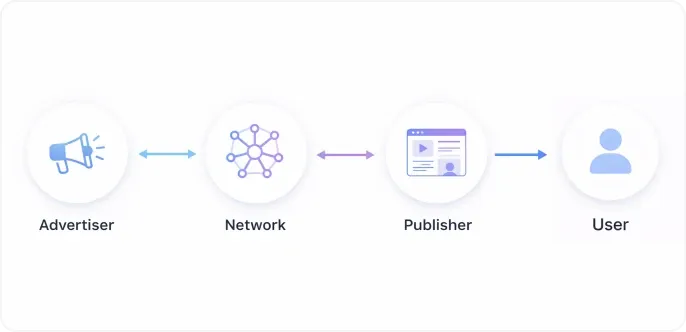
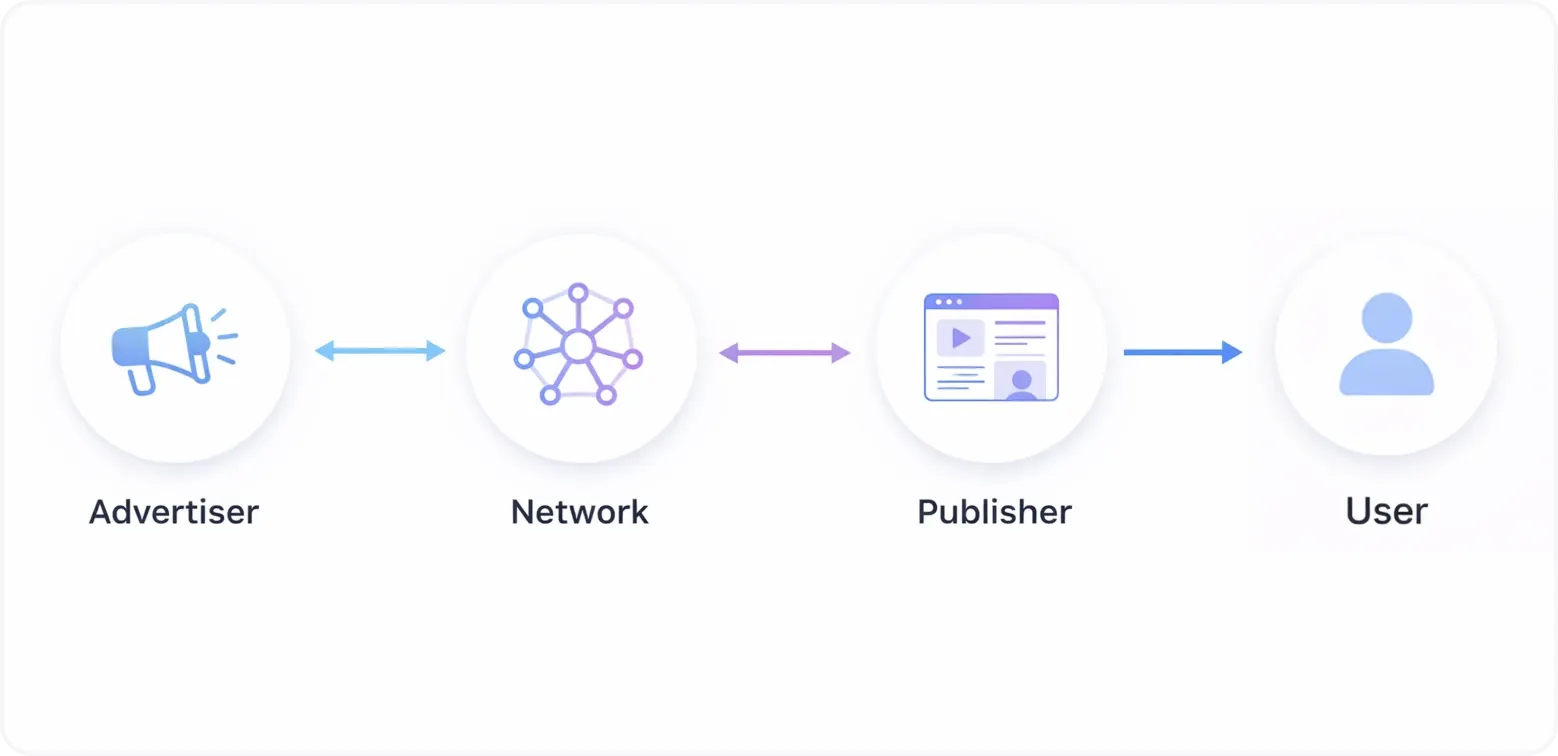
Diagram showing how an advertiser connects through the ad network to publishers and users

How the ad delivery process works

The operational flow of an ad network typically follows these steps:

  1. 1.Campaign setup

    The advertiser defines objectives, budget, targeting parameters, and pricing model.

  2. 2.Inventory matching

    The ad network analyzes available publisher inventory that matches the targeting criteria.

  3. 3.Ad serving

    When a user visits a participating website or app, the network delivers a relevant ad in real time.

  4. 4.Performance tracking

    Impressions, clicks, and conversions are recorded and reported within the platform dashboard.

This centralized process allows campaigns to scale efficiently across multiple publishers without manual coordination.

Common pricing models

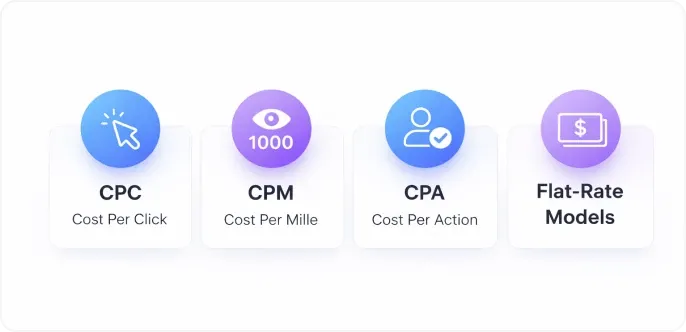
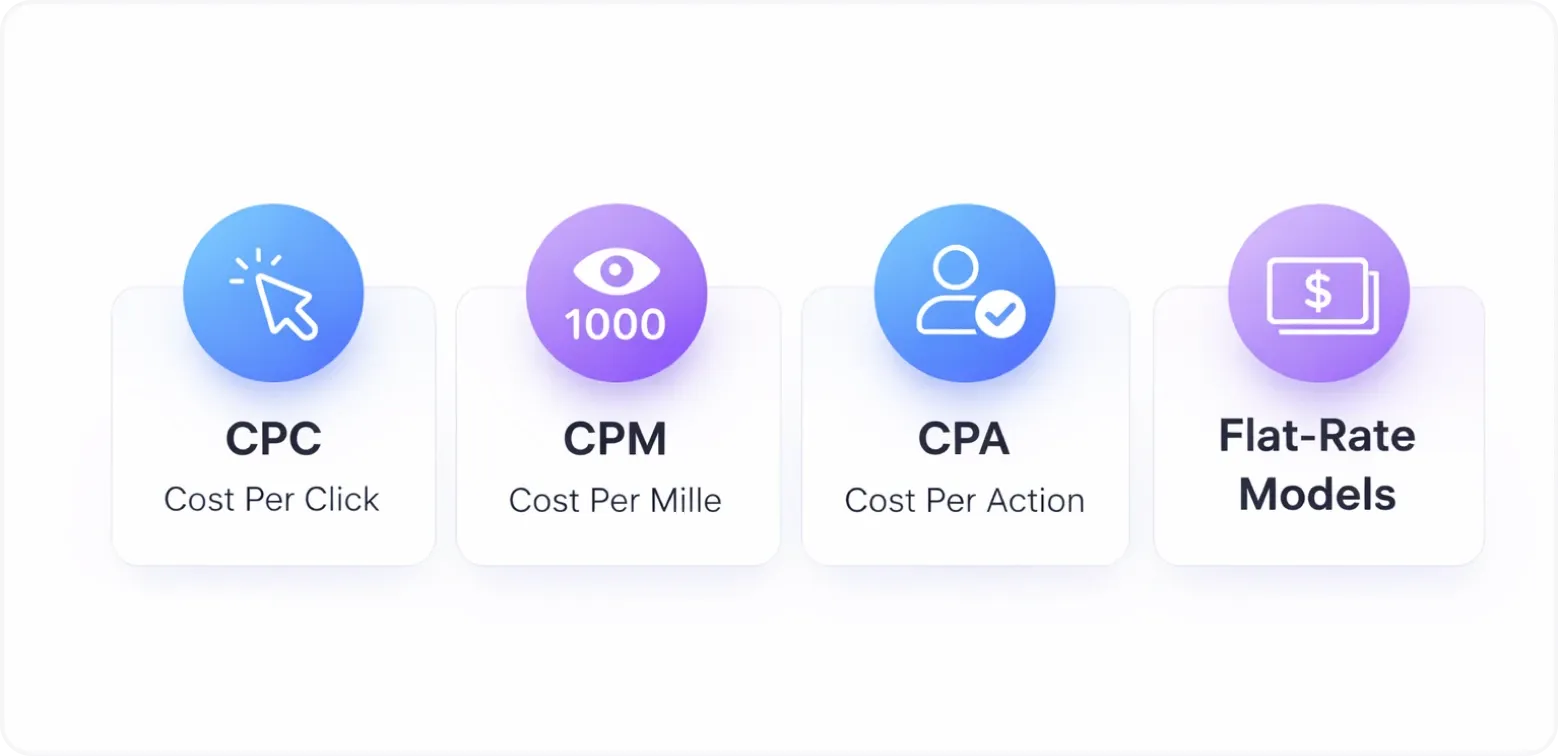
Ad networks typically support several pricing structures that determine how advertisers pay and how publishers earn revenue:

  • CPC (Cost Per Click) – Advertisers pay when a user clicks on an ad.
  • CPM (Cost Per Mille) – Payment is based on one thousand impressions.
  • CPA (Cost Per Action) – Payment occurs when a predefined action is completed.
  • Flat-Rate Models – A fixed fee for placement or campaign duration.

Each model influences campaign strategy, optimization decisions, and scalability.

Common pricing models: CPC (Cost Per Click), CPM (Cost Per Mille), CPA (Cost Per Action), and Flat-Rate Models

Targeting and optimization

Modern ad networks provide structured targeting and optimization tools to improve campaign efficiency. These commonly include:

  • Geographic targeting
  • Device and operating system filters
  • Audience segmentation
  • Contextual alignment
  • Automated bidding mechanisms

Performance data is continuously monitored to refine delivery and improve outcomes over time.

Where ad networks fit in the digital advertising ecosystem

In digital advertising, different models exist for connecting advertisers with publishers. Direct buying requires negotiating placements individually with publishers, which can limit flexibility and scalability. Programmatic exchanges operate through automated, real-time auctions where impressions are traded dynamically.

By contrast, ad networks aggregate supply and demand into a centralized marketplace. This structure simplifies access to inventory while maintaining unified campaign management, offering a practical balance between scale, operational control, and efficiency.

Factors to consider when working with an ad network

Partnering with an ad network involves considerations beyond campaign setup. Evaluating the following areas can help ensure transparency and long-term performance stability.

  • Defining goals and budget

    Clearly outline objectives, performance metrics, and budget allocation. Review platform guidelines, approval processes, and compliance requirements to avoid operational delays.

  • Evaluating inventory quality and sources

    Understand where traffic originates, what types of publishers are included in the network, and how placements are categorized or filtered.

  • Assessing transparency and reporting tools

    Examine the level of reporting detail available, including visibility into placements, traffic sources, and performance metrics.

  • Reviewing targeting and optimization capabilities

    Evaluate targeting depth, automation features, and optimization mechanisms that influence campaign efficiency and scalability.

  • Checking fraud prevention and brand safety measures

    Reliable networks implement traffic verification systems, anti-fraud technologies, and brand safety controls to protect campaign integrity.

Summary

Ad networks organize fragmented advertising inventory into a unified system that connects advertisers and publishers efficiently. By managing targeting, delivery, tracking, and pricing within one structured environment, networks simplify campaign execution and enable scalable monetization.