Skip to content

Ad formats for publishers explained

Ad formats determine how advertisements are displayed across digital properties, affecting both user experience and revenue potential. This guide outlines the main types of ad formats available to publishers and explains how their implementation influences engagement, viewability, and monetization outcomes.

Feb 12, 2026
Illustration for the article “Ad formats for publishers explained”

What is an ad format for publishers?

An ad format is the specific structure and presentation of an advertisement on a publisher’s digital property. It defines how an ad appears to users — such as banners, videos, or native posts — and determines technical requirements, placement options, and interaction behavior.

Factors affecting ad performance

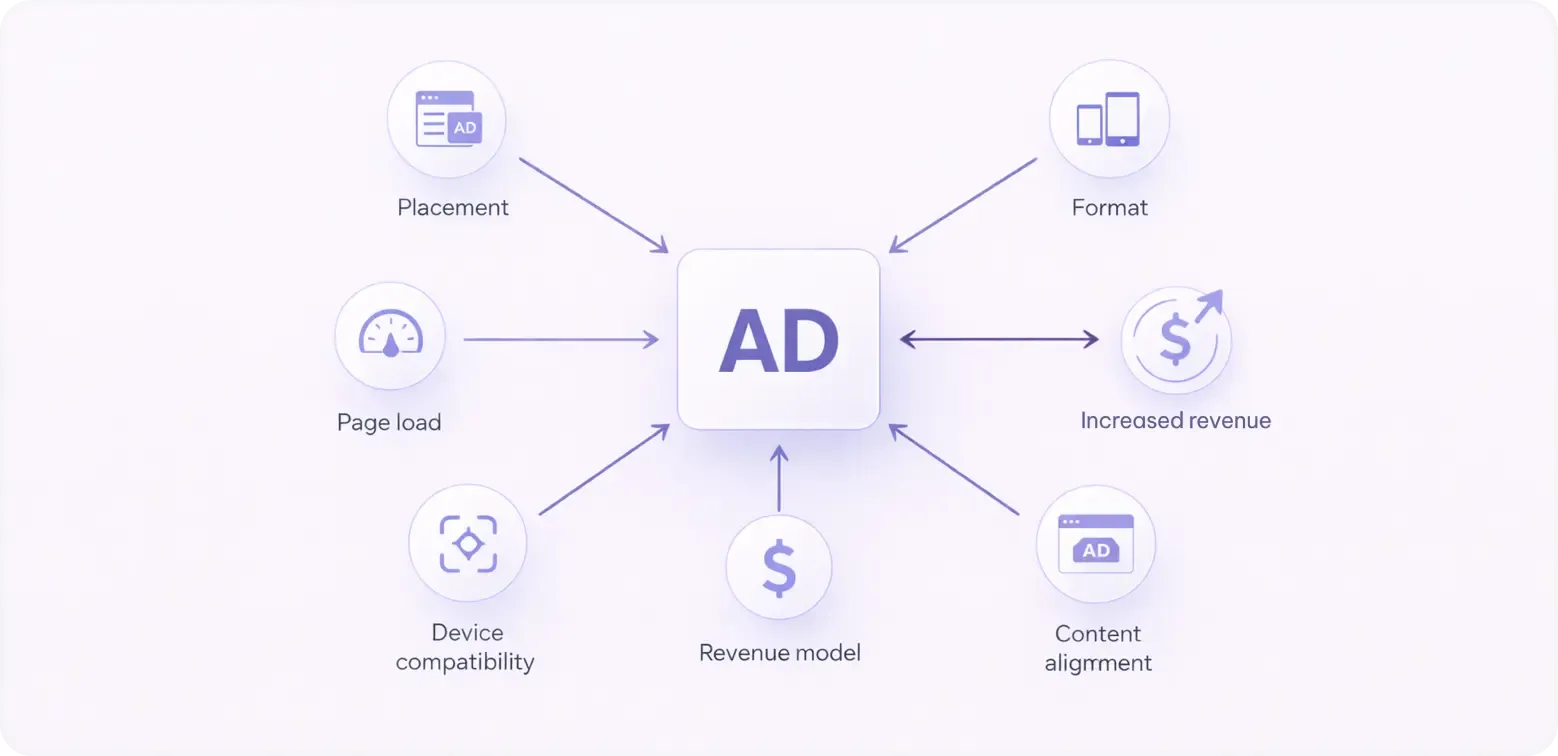
Ad performance on publisher sites and apps depends on several critical factors. They include:

  • Placement and viewability — Ads above the fold or within content are more likely to be seen.
  • Format type and size — Proper dimensions and format selection improve engagement and revenue.
  • Page load and technical performance — Heavy or slow-loading ads reduce user retention and viewability.
  • Device compatibility — Ads should display correctly across mobile, tablet, and desktop screens.
  • Content alignment — Ads that match the look and feel of surrounding content perform better.
  • Revenue model and fill rate — CPM, CPC, or programmatic setup impacts overall monetization.

Optimizing these factors can help publishers deliver ads that generate higher revenue and maintain a positive audience experience.

Factors affecting ad performance

Understanding ad performance metrics

To evaluate the performance of different ad formats, publishers rely on a few key metrics. CPM (Cost Per Mille) measures revenue per 1,000 ad impressions, showing how much an ad earns when viewed. CPC (Cost Per Click) tracks earnings from each click, highlighting engagement-driven revenue.

Fill rate indicates the share of ad requests successfully served, while session value reflects the average revenue generated per user visit. By tracking these metrics, publishers gain a clear picture of which formats deliver the best balance of revenue and user experience.

Ad types vs. ad formats for publisher

For publishers, it is important to distinguish between ad types and ad formats. Ad types are broad categories, such as display, video, native, or audio, that define the overall environment where ads appear.

At the same time, ad formats are the specific layouts within those types — like banners, in-feed posts, pre-roll videos, or interstitials — that determine how exactly ads are delivered, viewed, and monetized on a site or app.

Main ad format types

Most ad formats are grouped by type based on placement, interaction style, and delivery method. Below are the main categories, with examples of commonly used formats within each.

Display ads

Display ads are visual advertisements that typically occupy designated spaces without interrupting content flow and are designed to capture attention while users browse. Popular display formats include banner ads, leaderboard ads, sidebar ads, and rich media ads.

Native ads

Native ads blend organically with editorial content, matching the look, feel, and function of the surrounding environment. They are less intrusive and often achieve higher engagement and viewability. Common native formats are in-feed sponsored posts, recommended content widgets, and sponsored links.

Video ads

Video ads use motion and audio to engage audiences, appearing before, during, or after video content or as standalone placements on publisher properties. Popular video formats include pre-roll, mid-roll, out-stream, and rewarded video ads.

Audio ads

Such ads are delivered through streaming services, podcasts, or digital radio on publisher platforms. They reach audiences during listening sessions when visual attention may be low. Popular formats include in-stream audio ads, host-read podcast spots, and programmatic audio placements.

Interstitial and floating ads

These are full-screen or overlay formats that appear temporarily over content, designed to grab attention without permanently disrupting the user experience. Common formats include interstitial ads, floating banners, and pop-under ads.

Incentivized ads

Incentivized ads offer rewards or bonuses in exchange for user interaction. They are often used in mobile apps or gaming content. Popular formats include offer walls, reward-based video ads, and bonus content unlocks.

Indicators of ad format success

Publishers rely on measurable indicators to identify ad formats that deliver the best results. The most effective ones are usually evaluated using specific metrics, namely:

  • CPM — Higher CPMs indicate formats that generate more revenue per 1,000 impressions.
  • CPC — Strong click-through rates reveal which formats encourage audience interaction.
  • Viewability — Ads that are consistently seen have better monetization potential.
  • Fill rate — Formats with higher fill rates ensure more ad inventory is monetized.
  • Session value — Evaluating revenue per user helps identify formats that contribute most to overall earnings.
  • Engagement metrics — Metrics like time on page or scroll depth show how well ads blend with content without disrupting the user experience.

Monitoring these metrics helps publishers spot high-performing formats and prioritize them for revenue optimization across pages and devices.

Indicators of ad format success

Summary

Ad formats influence user engagement, viewability, and overall revenue by determining how ads appear and interact with audiences. Understanding the differences between formats helps publishers choose the most effective ad layout and type for each page or audience, balancing monetization potential with user experience.