Skip to content

How publisher monetization works

Publisher monetization is the foundation of digital content business models, which enables website and app owners to generate revenue from their audiences. This guide explains how publisher monetization works, what the main revenue streams are, and which factors influence earnings.

Feb 12, 2026
Illustration for the article “How publisher monetization works”

The publisher monetization ecosystem

The publisher monetization ecosystem is the system through which content creators generate revenue from their audience. It connects publishers, their platforms (websites, apps, newsletters), revenue streams (ads, subscriptions, affiliate sales, products), and audience interactions into a unified process.

Key players in publisher monetization

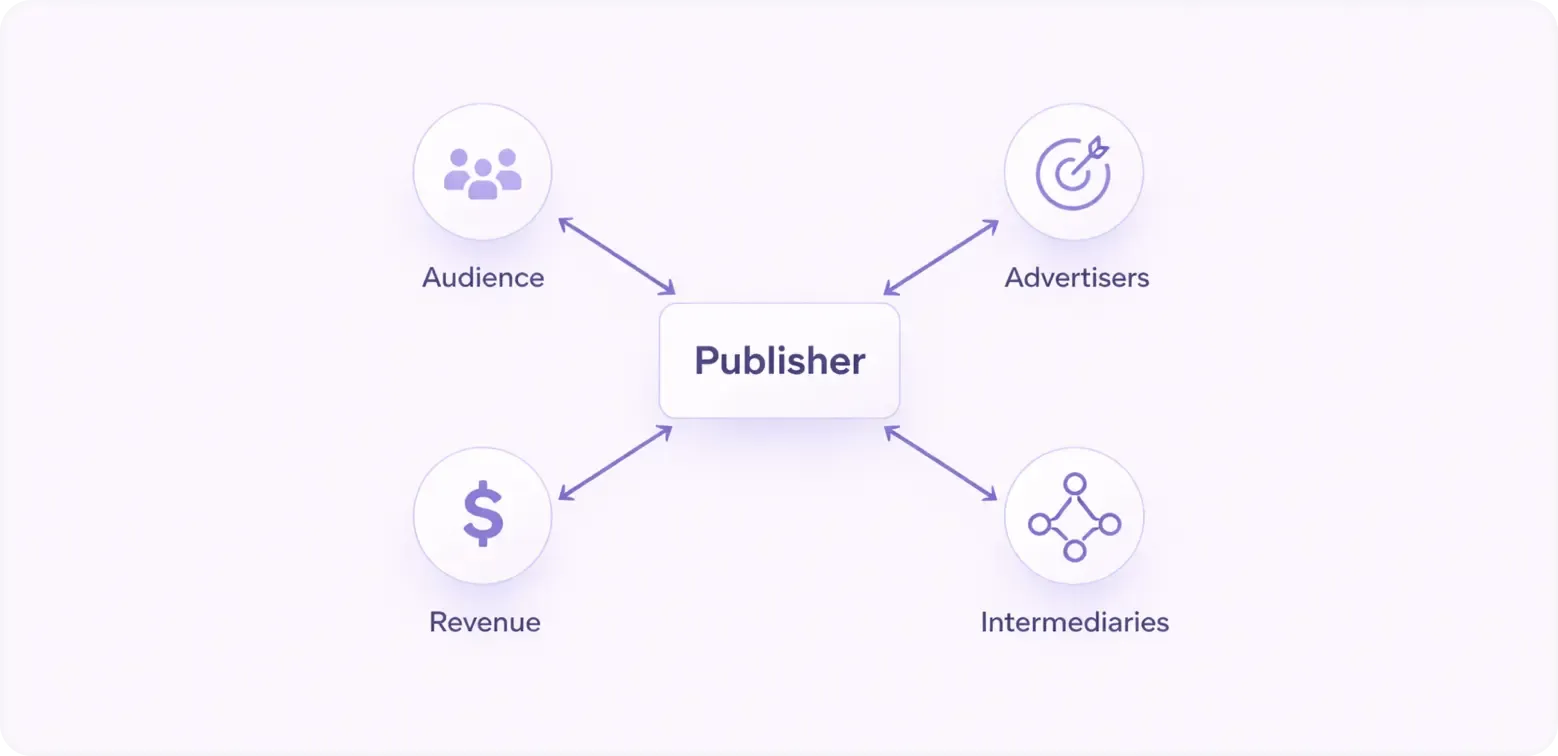
The publisher monetization ecosystem involves several core participants:

  • Publishers, who create content and manage platforms where audiences engage
  • Advertisers or partners, who pay to reach the publisher’s audience through ads, sponsored content, or affiliate programs
  • Users or audience, whose engagement — visits, clicks, or purchases — drives revenue
  • Intermediaries, such as ad networks, affiliate platforms, or subscription services, which help manage transactions, track performance, and facilitate payouts

Together, these participants create a dynamic system in which content, user activity, and monetization channels continuously interact.

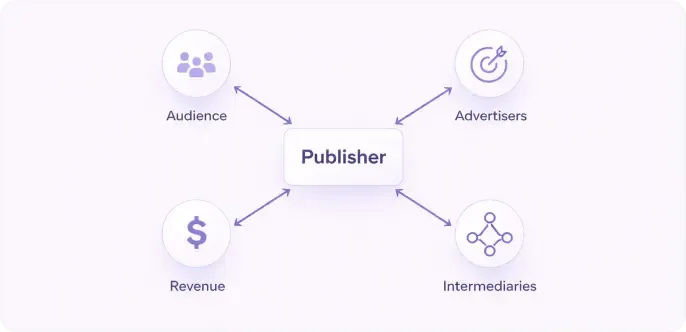
Key players in publisher monetization: publishers, advertisers, users, and intermediaries

Monetization mechanism

The monetization mechanism typically follows several interconnected stages. These are:

  1. 1.Content delivery

    Publishers create and distribute content through their platforms, attracting users.

  2. 2.Audience engagement

    Users interact with content through visits, clicks, subscriptions, or purchases.

  3. 3.Revenue generation

    Engagement is converted into income via ads, subscriptions, affiliate programs, or direct product sales.

  4. 4.Data collection

    User behavior and performance metrics are tracked across all revenue streams.

  5. 5.Optimization and adjustment

    Publishers analyze the data to refine content, placements, and monetization strategies for better results.

All these stages form a structured process that supports sustainable publisher revenue.

Core revenue models

Publishers can typically monetize their content and audience through several established revenue models. Below are the most popular ones.

  • Advertising revenue

    Publishers sell advertising space on their platforms through display ads, native placements, or sponsored content. Ads may be sold programmatically or through direct deals with advertisers.

  • Subscription / membership revenue

    Users pay recurring fees to access premium content or features. This model includes paywalls, tiered memberships, and exclusive materials available only to paying subscribers.

  • Affiliate marketing

    Publishers promote third-party products or services through tracked links and receive commissions when users complete purchases or other predefined actions.

  • Product or service sales

    Some publishers monetize by selling their own offerings, such as digital products, merchandise, online courses, consulting services, or ticketed events.

  • Other models

    Additional monetization approaches include donations, tipping systems, microtransactions, and other audience-supported funding methods that complement traditional revenue streams.

Factors influencing publisher revenue

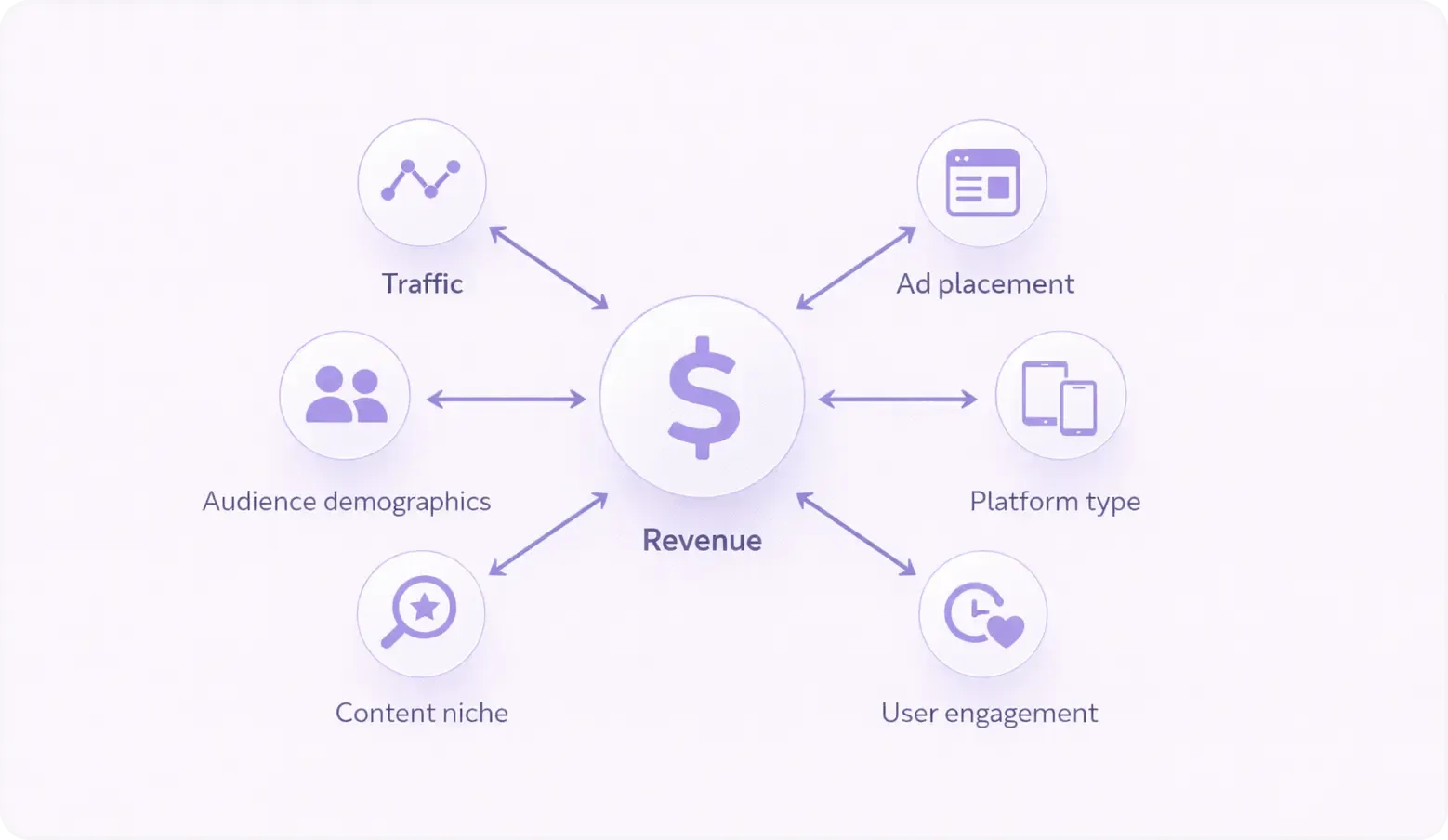
Publisher earnings depend on several structural and performance-related factors that affect how effectively audience engagement can be converted into revenue. These commonly include:

  • Traffic volume and quality
  • Audience demographics and purchasing power
  • Content niche and topic relevance
  • Ad placement and format selection
  • Platform type (mobile, desktop, app)
  • User engagement and session duration

These factors determine monetization potential and need to be continuously analyzed for revenue performance improvement.

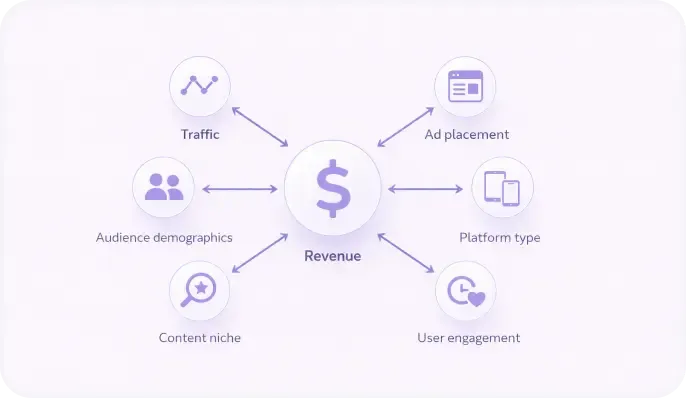
Factors influencing publisher revenue

Optimization strategies

Publishers are constantly exploring new approaches to make monetization more efficient and sustainable. Some of the most effective strategies include:

  • Programmatic advertising and AI-based optimization — Automated systems place ads in real time, matching the right message to the right user for maximum performance.
  • Subscription bundling and dynamic paywalls — Offering tiered access or flexible paywalls encourages long-term engagement and stabilizes recurring revenue.
  • Data-driven audience segmentation — Insights from user behavior and preferences help publishers deliver relevant content and increase conversion rates.
  • Long-term diversification of revenue streams — Combining ads, subscriptions, affiliate sales, and products reduces risk and supports steady growth over time.

Applying these methods can help publishers increase revenue and adapt effectively to changing audience behavior.

Summary

Publisher monetization turns audience engagement into revenue by connecting content, platforms, and various income streams in a structured system. By combining content delivery, user interaction, and data-driven optimization, it creates sustainable earnings across ads, subscriptions, affiliate programs, and product sales.